How I Help - Closing The Gap

I help founders make better commercial decisions at the point where innovation needs to become a viable business.

The areas below show the practical work we do together to close the Commercial Gap, strengthen the foundations of the business and move towards sustainable commercial success.

A person analyzing business data on a desk with charts and sticky notes labeled 'Customer Problem' and 'Key Insight'.

Customer & Market Clarity

Identify the real customer, the problem that matters and whether there is enough demand to justify moving forward.
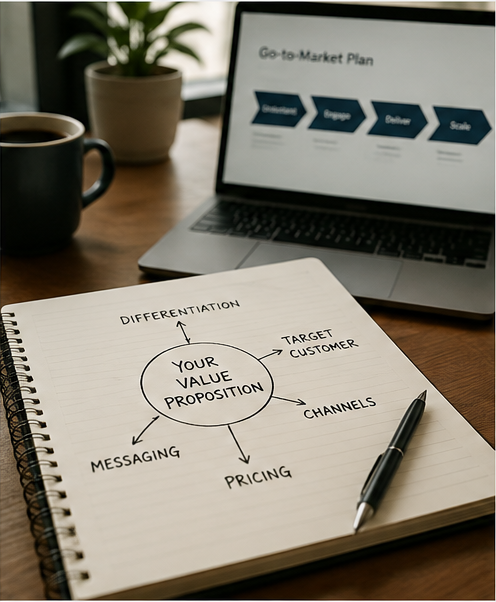
Notebook with a handwritten diagram of a value proposition on a desk, with a laptop showing a go-to-market plan and a coffee mug nearby.

Positioning and Route To Market

Clarify the proposition, differentiation, pricing and the most practical path to customers.
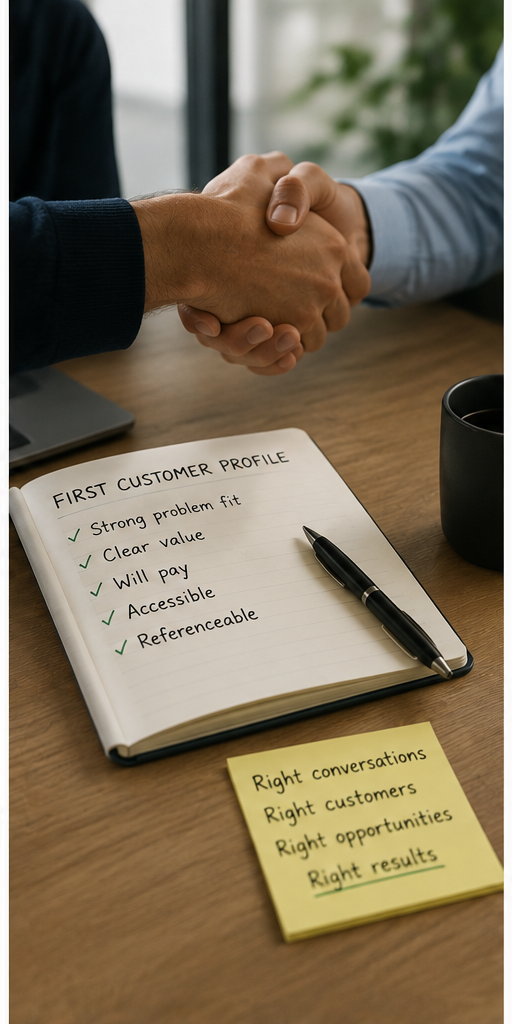
Two people shaking hands over a table with an open notebook listing customer profile qualities and a yellow sticky note with business-related notes.

Partnerships and First Customers

Prioritise the right conversations and avoid wasting time on weak prospects.

Person pointing at sticky notes on a whiteboard with a process flow from 'Shortlist Opportunities' to 'Scale'. Additional notes include 'Focus', 'Test', 'Learn', and 'Commercialise', alongside a bar graph with an upward trend arrow.

Early Revenue and Commercial Decisions

Focus on the right opportunities, challenge assumptions and build a credible path to revenue
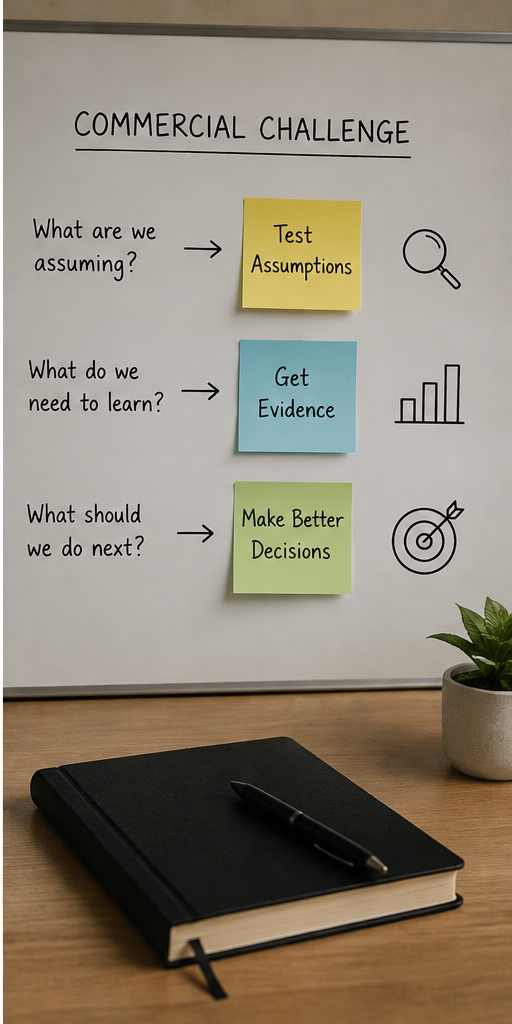
Whiteboard titled 'Commercial Challenge' with three steps: 'What are we assuming?' with a magnifying glass icon, 'What do we need to learn?' with a bar graph icon, and 'What should we do next?' with a target icon. Post-it notes in yellow, blue, and green display 'Test Assumptions,' 'Get Evidence,' and 'Make Better Decisions.' A potted plant is on the right side of the desk, and a black notebook with a pen is in the foreground.

Commercial Challenge

Expose gaps, test thinking and focus the founder on what matters most.
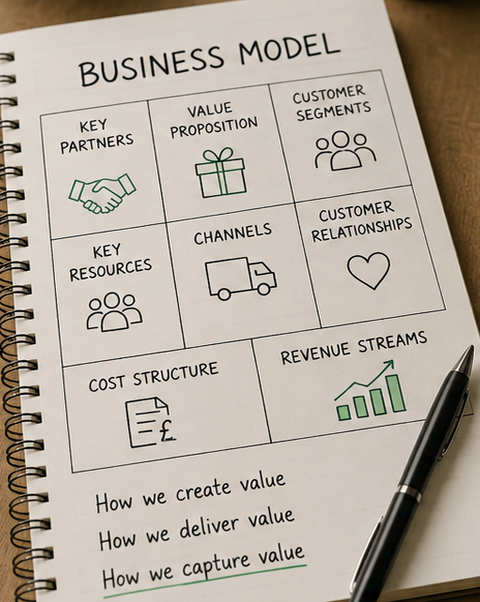
A printed page outlining a business model with sections for key partners, value proposition, customer segments, key resources, channels, customer relationships, cost structure, and revenue streams. Handwritten notes explain creating, delivering, and capturing value.

Business Model

Define how the business will make money and what customers will pay for.